Endometriosis Relief That Goes Deeper Than the Surface: A Root-Cause Guide to Nutrition, Gut Health, and Whole-Body Care
By Dr. Sarah Khan, PhD, MBA, Integrative & Functional Nutritionist
If you've spent years being told your pain is "just bad periods," you are not imagining things, and you are far from alone. Endometriosis affects roughly 1 in 10 women of reproductive age, yet most people wait somewhere between 4 and 11 years to get a diagnosis. That gap isn't a personal failing. It's a reflection of how poorly understood this condition still is, and how often menstrual pain gets brushed aside before anyone bothers to look closer.
As a functional nutritionist, I work with women who are tired of being handed the same two options and told that's all there is. In my practice I treat the whole person, not just the symptom on the intake form. This guide pulls together what the current research actually says about easing endometriosis, weaving together functional nutrition, gut health, lifestyle science, and the role complementary therapies like acupuncture can play. The goal isn't to replace your medical care. It's to give you real, evidence-informed ways to start feeling like yourself again.
What Endometriosis Actually Is
Endometriosis is a chronic, estrogen-driven inflammatory condition in which tissue similar to the lining of the uterus grows outside the uterus, often on the ovaries, fallopian tubes, and tissue lining the pelvis. Every cycle, that misplaced tissue responds to hormonal signals the way the uterine lining does. It thickens, breaks down, and bleeds, but with nowhere to exit. The result is inflammation, scar tissue, and the deep, often debilitating pain so many people describe.
It's a whole-body condition, not a localized one. Beyond the classic painful periods (dysmenorrhea), endometriosis commonly brings chronic pelvic pain, pain during or after sex, painful bowel movements, fatigue, bloating, digestive upset, and difficulty conceiving. Because those symptoms overlap with things like IBS, it often gets misread for years before anyone connects the dots.
Two themes sit at the center of nearly all the research: inflammation and estrogen. Almost every meaningful natural strategy works by influencing one or both. That's the thread I'll follow throughout this guide.
Why I Take a Root-Cause Approach
Conventional care for endometriosis usually centers on hormonal suppression, pain medication, or surgery. These tools matter, and for many women they're an important part of the picture. But they're largely aimed at managing symptoms, and recurrence is common.
My work sits alongside that care, not against it. A root-cause, systems-biology approach asks a different question: what is feeding the inflammation and estrogen dominance in the first place, and how do we change that terrain? That's where nutrition, gut health, and daily habits become some of the most powerful levers you have, because you get to use them every single day, between appointments and well beyond them.
Eating to Calm the Fire: Anti-Inflammatory Nutrition
Because endometriosis is fundamentally inflammatory and estrogen-sensitive, food is one of the most powerful tools at your disposal. The research here has grown a lot in recent years, and a clear picture has come into focus.
Diets rich in fruits, vegetables, fiber, and omega-3 fats, the Mediterranean and broadly anti-inflammatory eating patterns, are repeatedly linked to less pain and better quality of life. In one six-month study, a Mediterranean diet education program improved participants' metabolic and oxidative profiles and significantly boosted their overall quality of life.
Here are a few practical, evidence-aligned shifts I often start clients with.
Load up on antioxidant-rich produce. Women with endometriosis tend to show lower levels of vitamins A, C, and E, which are linked to higher oxidative stress. Vitamins C and E together have shown potential to reduce pain. In plain terms: colorful plants at every meal, and plenty of them.
Prioritize omega-3 fats. Found in fatty fish like salmon and sardines, walnuts, and flax, omega-3s have anti-inflammatory effects that may help calm the inflammatory environment driving symptoms.
Increase fiber. Beyond keeping you regular, more dietary fiber helps lower circulating estrogen, which matters a lot for an estrogen-dependent condition. Think beans, lentils, whole grains, vegetables, and fruit.
Ease up on the pro-inflammatory stuff. The research consistently points toward limiting processed foods, red meat, and animal fats, all of which are associated with a more inflammatory internal environment.
A quick but important note on supplements: omega-3s, N-acetylcysteine, vitamin D, resveratrol, and vitamins C and E all show promise in early research, but the evidence is still emerging and the right plan depends on you. Please don't build a supplement stack off a blog post. This is exactly the kind of personalization I do one-on-one with clients, because dosing and combinations should be matched to your labs, your symptoms, and your history.
The Gut-Hormone Connection You Haven't Heard Enough About
This is one of the most exciting frontiers in endometriosis science, and it ties the whole picture together. Your gut bacteria help regulate how much estrogen circulates in your body through a collection of microbes called the estrobolome.
When the gut microbiome falls out of balance, a state called dysbiosis, this estrogen-recycling system can go into overdrive and feed the estrogen dominance that drives endometrial lesions. Research has found that women with endometriosis show distinct patterns of gut imbalance, including elevated activity of an enzyme (beta-glucuronidase) that effectively recirculates estrogen back into the body instead of clearing it. Dysbiosis also weakens the gut barrier and ramps up the systemic inflammation endometriosis thrives on.
What this means in practice: supporting your gut is supporting your hormones. The fiber-rich, plant-forward, anti-inflammatory eating described above feeds beneficial bacteria. Fermented foods, and in some cases targeted probiotics, may help rebuild a healthier microbial balance. This gut-hormone axis is a big reason a root-cause, whole-system approach tends to outperform treating any single symptom on its own. It's also why, in my practice, gut health is almost always one of the first places I look.
Where Acupuncture Fits In
Nutrition does a lot, but it works best as part of a wider plan, and acupuncture is one of the complementary therapies I most often recommend to clients alongside the food and lifestyle work.
The evidence is genuinely encouraging. A 2025 meta-analysis pooling nine randomized controlled trials and 535 patients found that acupuncture significantly reduced pain intensity and more than doubled clinical response rates compared with non-acupuncture treatment. A separate 2024 network meta-analysis concluded that acupuncture and related therapies are effective and safe ways to relieve pain and improve quality of life for people with endometriosis. And a multicenter, placebo-controlled trial of 106 women reported that acupuncture meaningfully reduced period pain and shortened how long the pain lasted, with no serious side effects.
The consistent direction of the evidence, real pain reduction with a strong safety profile, is exactly why acupuncture has earned a place in integrative endometriosis care. It appears to influence the body's pain-processing pathways, dial down inflammatory signaling, and shift the nervous system out of the fight-or-flight state that chronic pain keeps you locked in.
This is also why I'm grateful to share this piece on the Black Lotus Acupuncture blog. Dr. Aliya Stimpson's work is a beautiful example of the kind of practitioner I love to collaborate with, treating the root rather than just the symptom, and pairing acupuncture with deep nervous-system care.
Lifestyle Levers That Actually Move the Needle
Food and bodywork land best inside a life that supports healing. The research keeps pointing to three more pillars worth your attention.
Move your body, gently and regularly. Physical activity helps lower inflammation and supports healthier estrogen metabolism. With endometriosis, the goal isn't punishing workouts. It's consistent, feel-good movement like walking, swimming, yoga, or strength work you actually enjoy.
Take stress seriously as a clinical factor. Chronic stress keeps your nervous system in overdrive and can amplify both inflammation and pain perception. This isn't a "just relax" platitude. Stress regulation is genuinely part of the treatment. Breathwork, meditation, time in nature, and nervous-system-calming therapies all count.
Protect your sleep. Sleep is when your body does its anti-inflammatory and hormonal housekeeping. Good sleep hygiene shows up in the literature as an integral part of comprehensive endometriosis care, not an afterthought.
Putting It Together: A Root-Cause Approach
No single intervention "cures" endometriosis, and anyone promising that isn't being straight with you. But the most encouraging message in the research is that these strategies stack. Anti-inflammatory, fiber-rich eating to cool the inflammation and support estrogen clearance. Gut care to rebalance the estrobolome. Acupuncture to relieve pain and calm the nervous system. Movement, stress regulation, and sleep to hold it all together.
This is the heart of how I practice: addressing the root, not just the symptom, and treating you as a whole person rather than a diagnosis. Endometriosis care works best as a partnership between your gynecologist, a skilled acupuncturist, and a functional nutritionist, each contributing a piece.
If you're navigating endometriosis and you're tired of being told to just push through the pain, I'd love to help you build a plan that meets your body where it is. You can learn more about working with me at sarahfunctionalnutritionist.com.
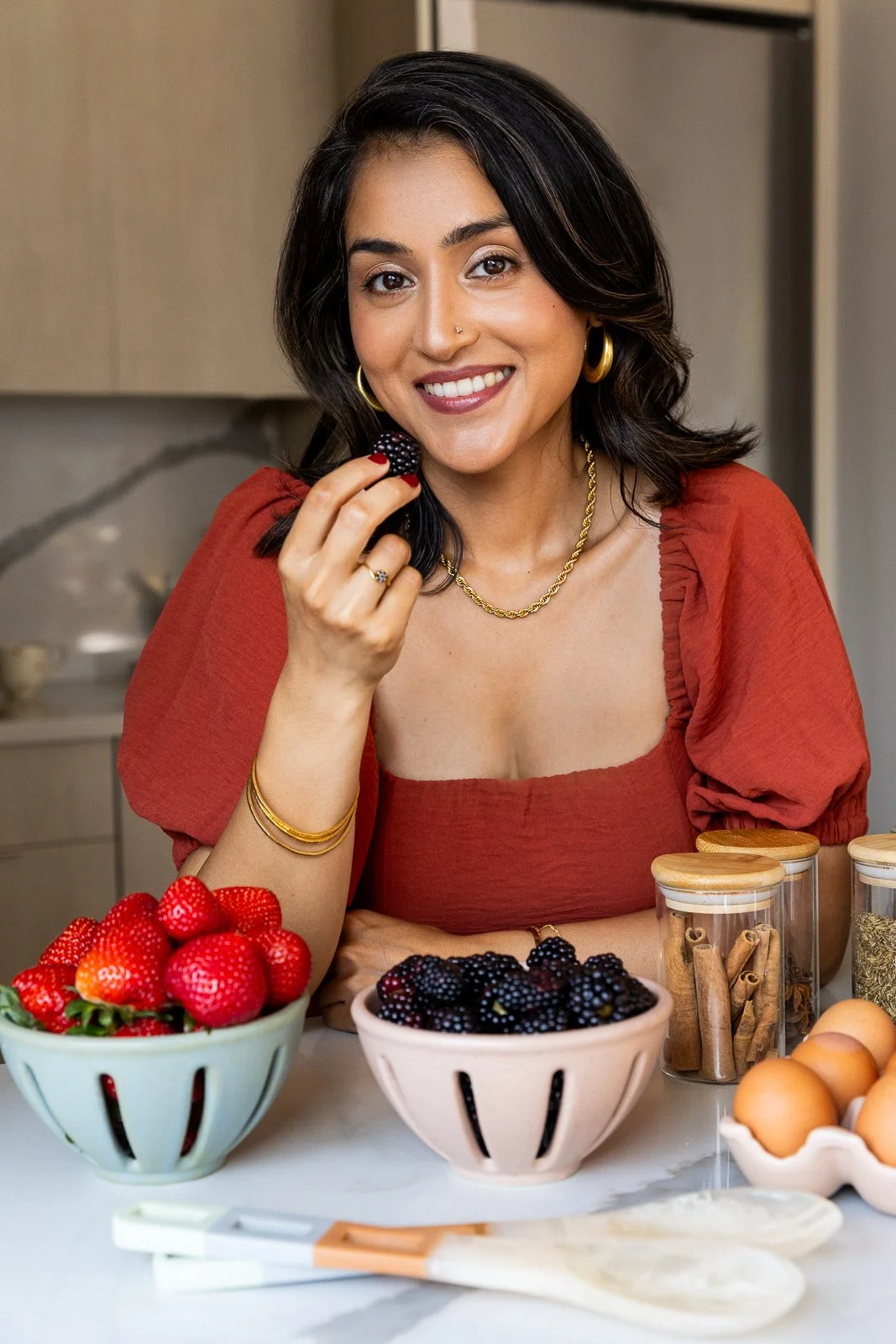
Dr. Sarah Khan, PhD, MBA, is an Integrative and Functional Nutritionist based in New York City. After more than a decade in tech, she earned her PhD and MBA and transitioned into functional nutrition, drawing in part on her own experience with Hashimoto's. Her concierge practice centers on a root-cause, systems-biology approach to gut health, hormones, autoimmune disease, and chronic illness. Learn more at sarahfunctionalnutritionist.com or on Instagram @dr.sarah.s.khan.
This content is for educational purposes only and is not a substitute for individualized medical care. Endometriosis is a serious condition that warrants proper diagnosis and management with your healthcare provider. Always consult a qualified professional before making changes to your treatment, diet, or supplement routine.
